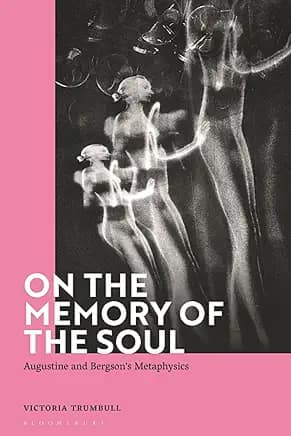
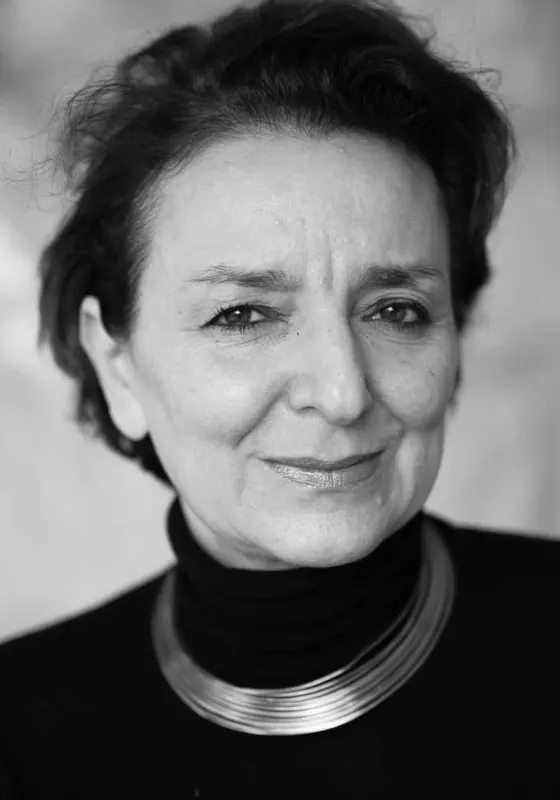
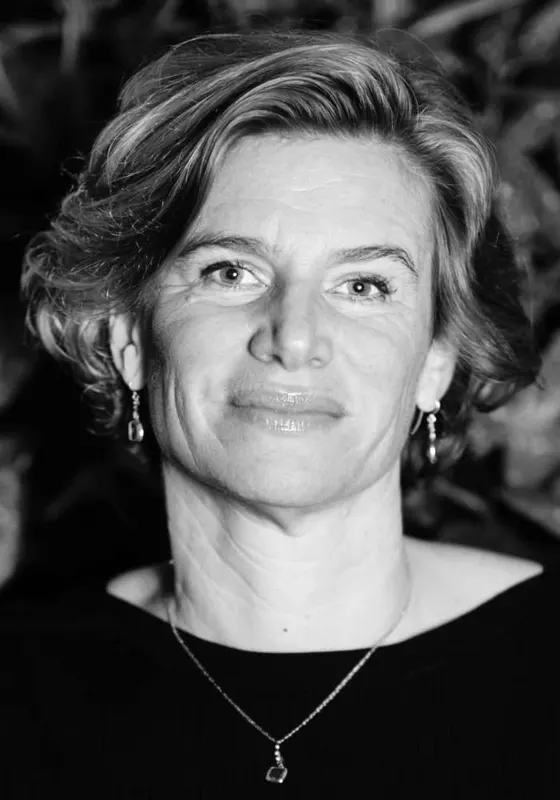
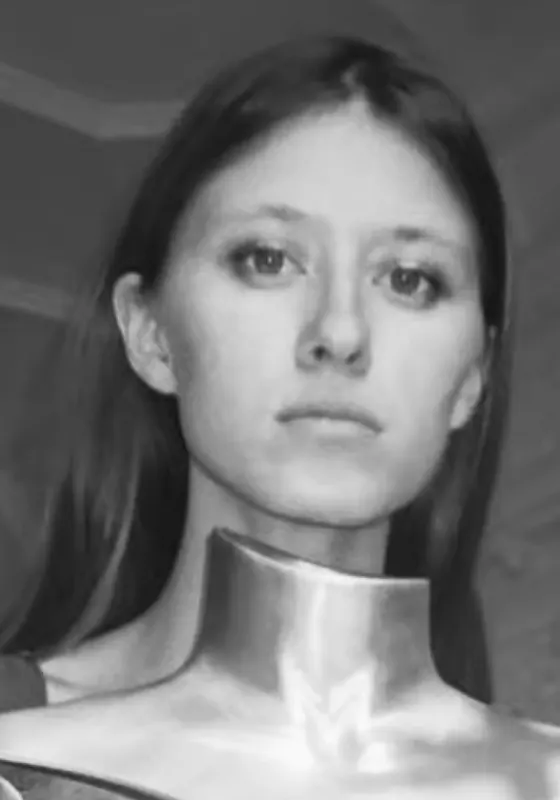
Meet Dr Victoria Trumbull: the philosopher who says big tech has got it wrong on superintelligence
Do we actually know what consciousness is? Dr Victoria Trumbull thinks we need to ponder this more before claiming AI superintelligence is feasible.
Where does science end and philosophy begin? It’s a question the greatest minds and thinkers have interrogated since the Age of Reason. For Dr Victoria Trumbull, a philosopher from the University of Oxford who specialises in memory, cognitive science and artificial intelligence, it’s a more pertinent question than ever, with the rise of AI and dubious definitions of consciousness being bandied around by those at the top of tech.
OpenAI founder Sam Altman has said we will have created artificial superintelligence by 2030. Elon Musk, owner of xAI, predicts we’ll have digital superintelligence this year. “But what is human intelligence?” asks Trumbull. “It goes beyond just puzzle- and problem-solving.
“There’s memory, personality, emotion, intuition and all kinds of ways of knowing that the human mind possesses, which cannot be broken down into a series of discrete steps. The attempt to reconstruct what are fundamentally fluid, dynamic movements of the mind through step-by-step calculations will only ever be a mimicry.”
Trumbull’s work uses metaphysics to ask probing questions of cognitive science. It destabilises the foundations on which many of the AI industry’s definitions of consciousness are built.
Looking at memory, she challenges an entirely empirical understanding of the brain that equates it to a machine, where the emotion invoked by a work of art, or the sensation of a warm summer breeze, can be reduced to nothing more than electrical impulses in the nervous system. According to Trumbull, this misleading empiricism is joined at the hip with some of the philosophies driving machine learning.
“Cognitive science in the 1960s sought to reduce thinking to a series of logical rule-based operations inspired by the way a computer algorithm works,” she says. “The technology informed the philosophy, but the philosophy then came back around again to inform the technology. We see this reciprocal relationship between both sciences clearly with their shared terminology, such as networks, pathways and nodes.” This has created a simulacrum: a convexed mirror in which cognitive science and computer science reflect each other’s misconceptions about the brain.
She continues: “Is this how human thought actually works? If you look at a child who’s learning a language, a three-year-old will be able to attribute the same word in different environments,” she says. “They haven’t been trained [like LLMs] on the vast amount of human linguistic information available on the internet.”
Our body’s role in perceiving the world is also, for now, an important distinction from us and machines that is often overlooked in the AI sector. “Embodied beings and biological organisms is one of the first difficulties to surmount in comparison between man and machine,” argues Dr Trumbull. “We perceive the world dynamically, which means qualitatively. We perceive all kinds of colors, properties, textures through multiple senses. As Martin Heidegger would say, we're ‘beings in the world’.”
She is wary, however, of the idea that the whole AI industry has the same misconceptions about questions of intelligence and consciousness. “French computer scientist Yann Lecun thinks we would need to break entirely out of the LLM system to create something that resembles human intelligence,” she says.
Trumbull’s work reminds us to be cautious of the rhetoric from the big tech bosses about AI’s ability to challenge human intelligence. After all, they have a vested interest in raising the ceiling of AI’s potential. “I don’t doubt AI is potentially the biggest technological breakthrough of our lifetimes,” she concludes. “What I do doubt is that it will be able to reconstruct anything like the human mind.”